Standing Out In An Increasingly Competitive Market
Did you miss our latest Webinar with Track on June 25th? No problem! Let us catch you up on the full presentation and everything you missed. Our goal today is to talk about what's actually happening in the vacation rental industry right now and what you can do about it!

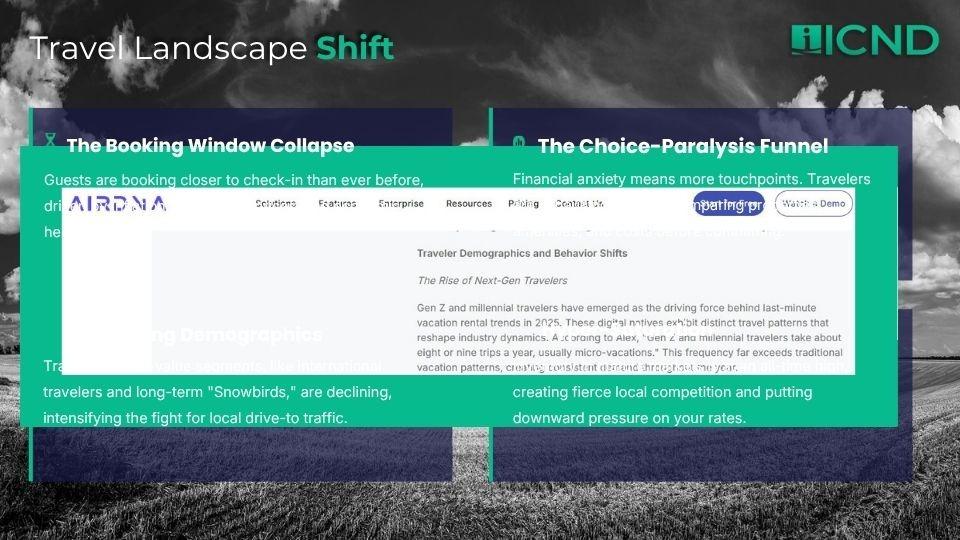
Before we talk about marketing strategies, we need to talk about the environment we're marketing in. Travel demand is still strong but shifting. Economic uncertainty, demographic shifts, inflation and even gas prices are heavily impacting summer travel trends. We’re noticing booking window changes, choice paralysis, a change in demographics and higher saturation in many markets.
I have a few quotes here that I’d like to share with you that have been published recently:
 
 
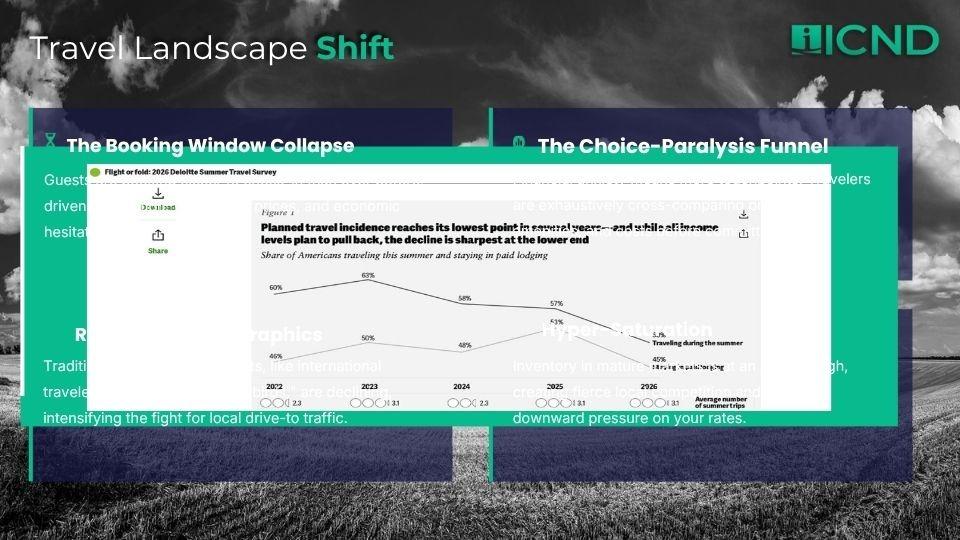
First up we have Deloitte who recently reported that Only 45% of Americans plan to take a summer vacation with paid lodging in 2026, the lowest level in six years.
 
 
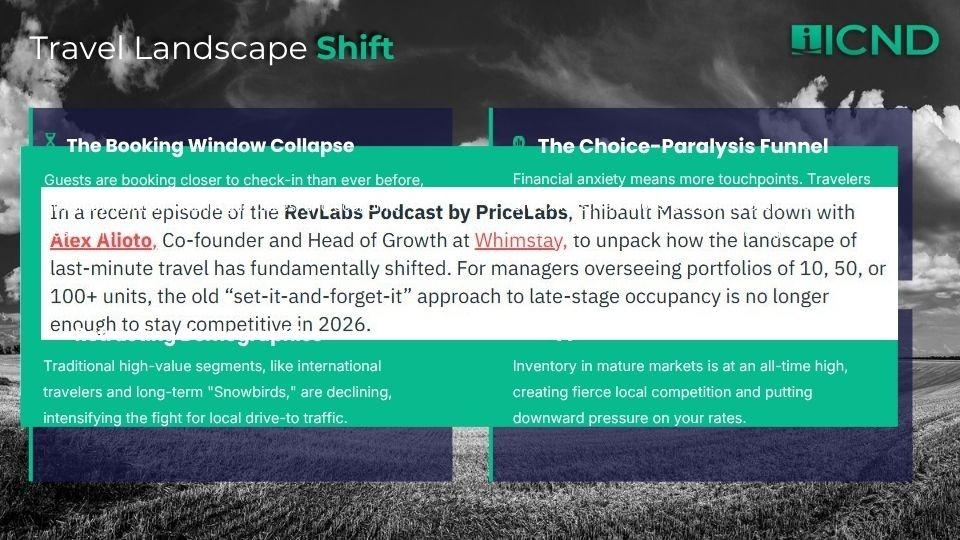
Price labs reported recently
“Travelers are waiting longer to book, which creates uncertainty and makes forecasting much more difficult. Demand hasn’t disappeared, but booking behavior has changed.”
 
 
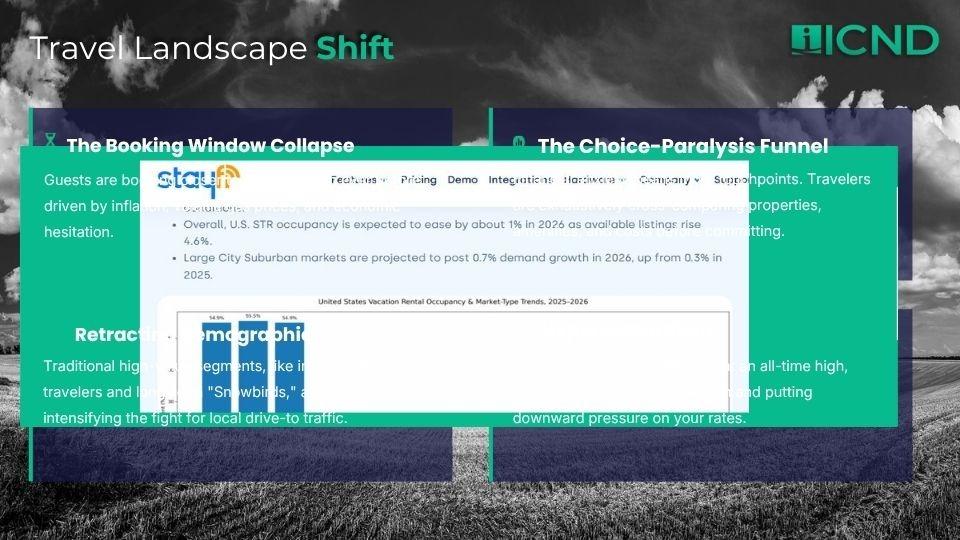
Stayfi reported
“Available STR listings are projected to grow 4.6% in 2026 while occupancy is expected to decline about 1%. “


Now we all know statistics are only as strong as the subjects that are polled. But We are all seeing these articles and we’re also seeing first hand what changes are impacting the current market, so I share this to remind us all to take these stats with grain of salt but use them as a rough guide to understanding the current market conditions.
So with that, we’ll dive into todays topic. Standing out in an increasingly changing market. It isn't just about getting visibility anymore. It's also about understanding your market, being flexible, and giving travelers enough confidence to choose you over all the other options they're considering.


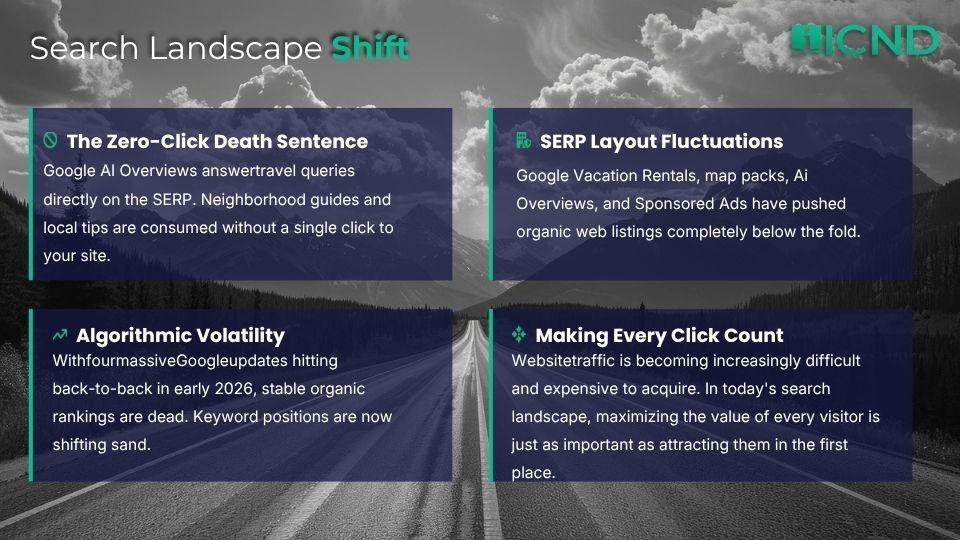
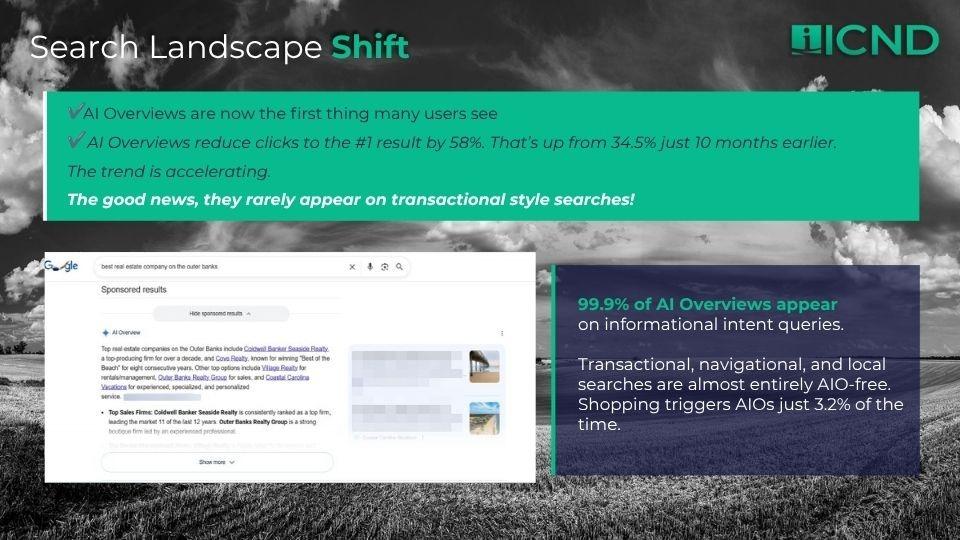
The market isn't the only thing changing. Search is changing too. Google is increasingly answering travel questions directly on the search results page through AI Overviews, local results, and other search features. Travelers can learn about destinations, neighborhoods, and things to do without ever clicking through to a website. Add in Google Vacation Rentals, map packs, and sponsored listings, and organic visibility continues to shrink.

Rankings still matter, but earning a click is becoming harder, which means every website visitor has become significantly more valuable.

One of the most important KPIs to watch during this period isn’t necessarily traffic or even total bookings. It’s conversion rate. As search evolves and AI tools answer more top of the funnel questions directly, the users who do reach your website are often further along in the decision making process. In the past when a potential lead hit your website it was to vet you, read your company history page, check out your reviews but now they’ve already done that through AI… This means they are hitting your website for the first time not vetting you but ready to book.

The goal is no longer simply driving more visitors. It’s converting a larger percentage of the qualified visitors who do make it to your site.
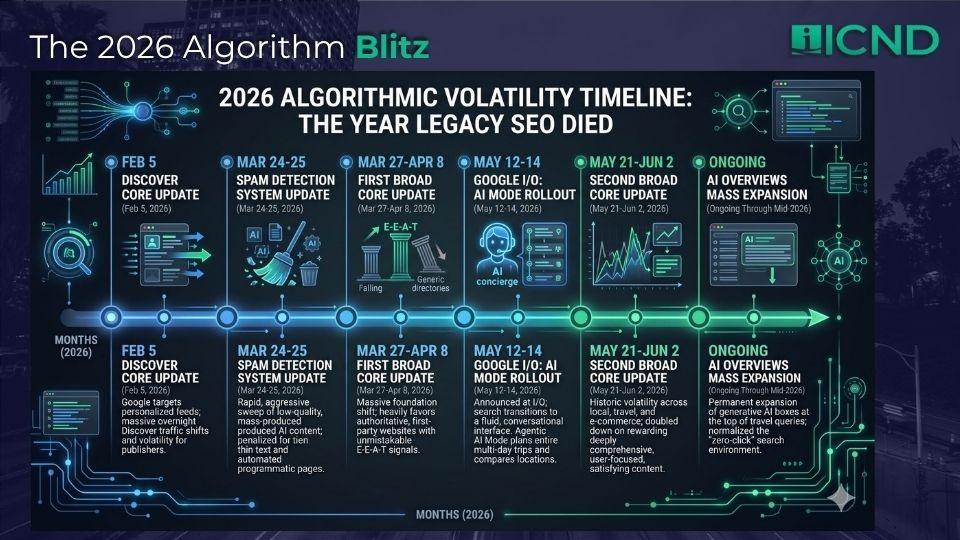
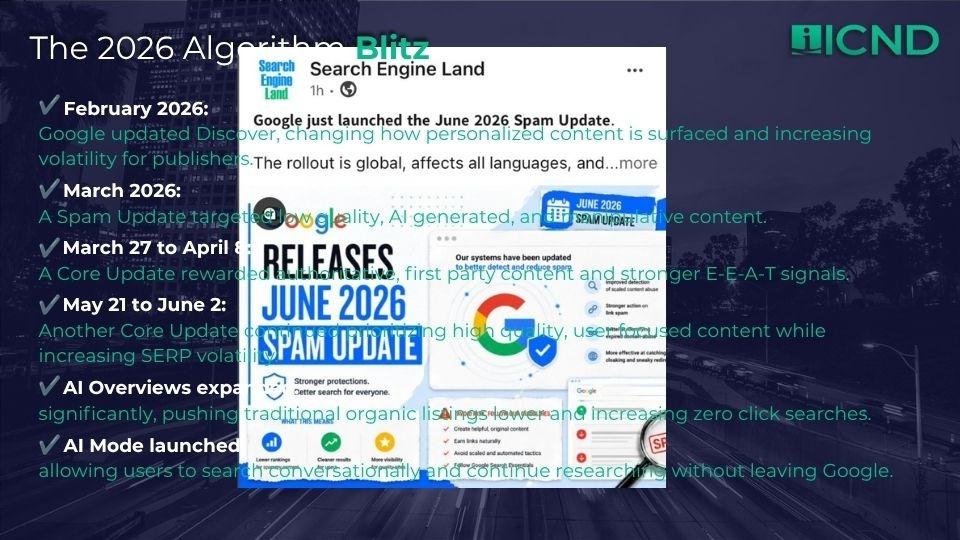


So if all these changes weren’t enough, lets throw in the Algorithm blitz of 2026. One of the biggest challenges every website owner that wants to rank on Google is facing right now is simply keeping up with the pace of change. Over the past several months we've seen multiple core updates, spam updates, AI updates, and major changes to how Google surfaces information. Search is evolving faster than ever before. Strategies that worked a year ago aren't necessarily producing the same results today. That's why ongoing optimization and adaptation is so important.


Even as I was building this presentation, Google released another algorithm update…
If we look at the common thread across all of these updates, it's actually pretty simple. Google continues rewarding authoritative, trustworthy, first-party content while reducing visibility for low-quality, thin, or mass-produced content. E-E-A-T signals continue to become more important, and AI is becoming more integrated into the search experience. These aren't temporary experiments. These are structural changes that are reshaping how travelers discover information online.


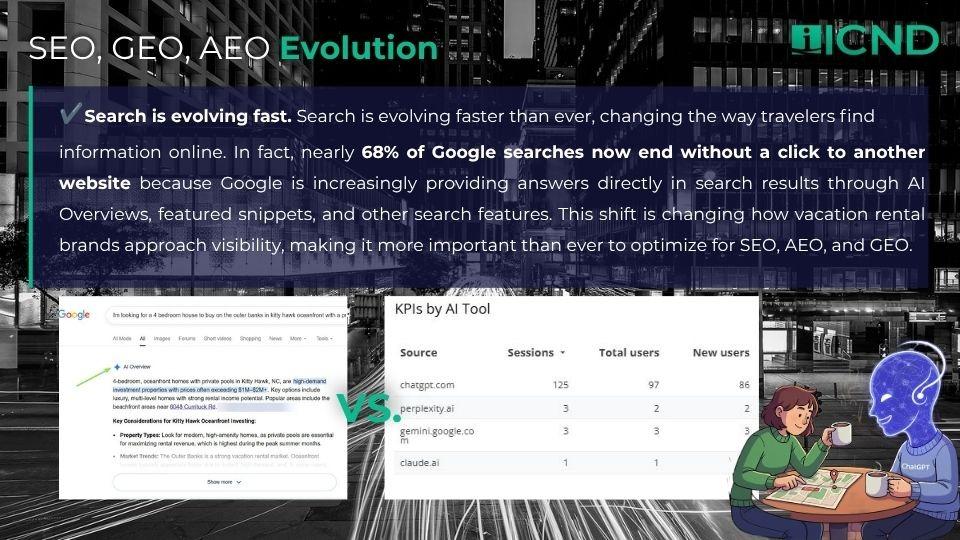
One of the statistics that really changed the way I think about search is this one. Nearly 68% of Google searches now end without a click to another website. Google is increasingly providing answers directly within search results through AI Overviews, featured snippets, local results, and other search features. At the same time, we're beginning to see traffic from AI platforms like ChatGPT, Gemini, Claude, and Perplexity appear in our analytics. The numbers are still relatively small today and account for only about 1% or less of your overall site sessions but the trend is growing. Travelers are beginning their journey on AI platforms as part of their research process, and that's something every marketer should be paying attention to.


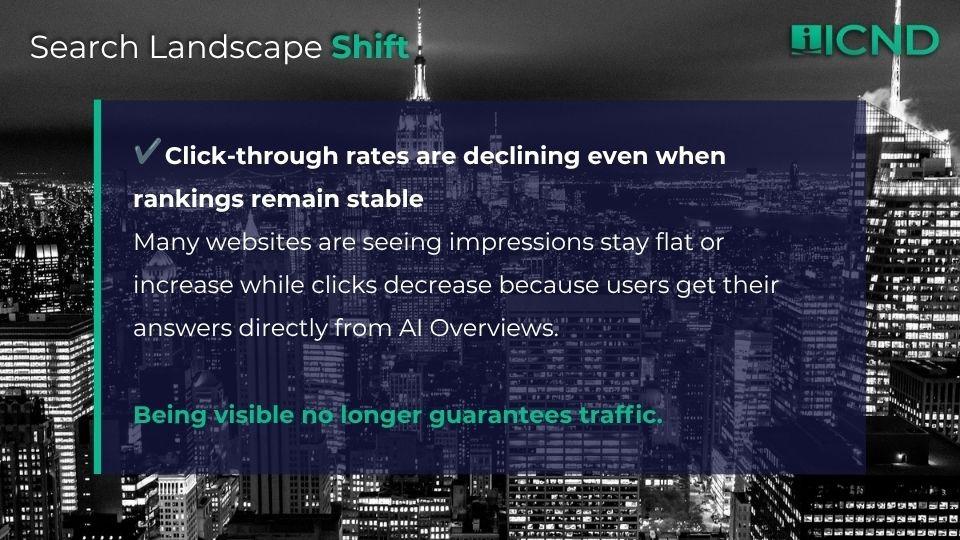
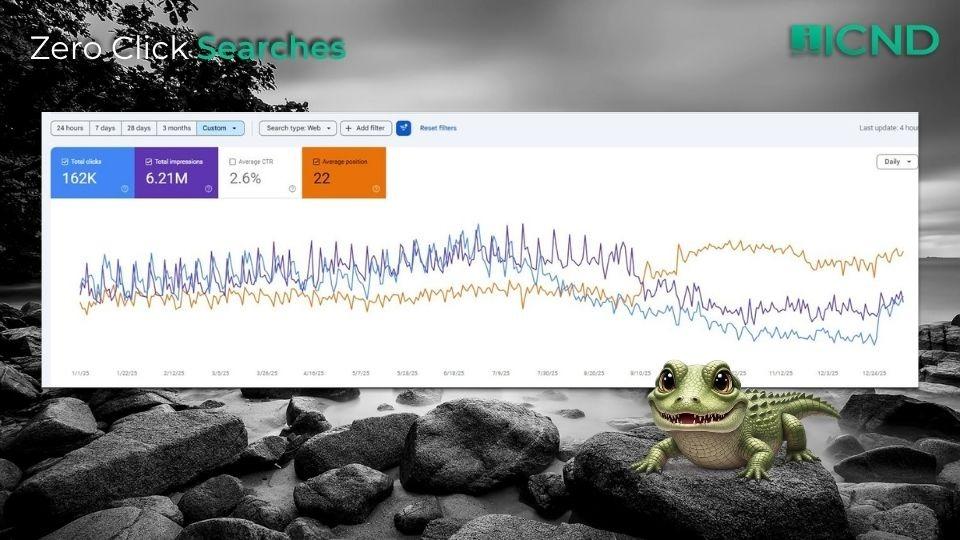
Another trend we’re noticing that I would encourage everyone to look for in their own Search Console data. We're seeing impressions remain stable, and in some cases even increase, while clicks continue to decline. That's because users are getting their answers directly from AI Overviews without needing to visit a website. Visibility is still important, but visibility alone no longer guarantees traffic the way it once did.


This trend has been coined as the crocodile effect or the alligator… just depends where you live. Here you’ll see a client example that helps visualize exactly what's happening. Notice how impressions remain strong while clicks trend downward over time creating the shape of a crocodile mouth. That's the impact of zero-click search behavior. Users are still searching, Your content is still being surfaced But Google is increasingly becoming the destination rather than the pathway. That's why we need to think differently about how we measure success. If you’re seeing this crocodile effect in your reporting, but your keyword rankings remain strong and you’ve already optimized your meta titles and descriptions to improve click-through rates, then it’s likely not a performance issue. It’s a reflection of the market we’re operating in today. This isn’t necessarily a sign that your strategy isn’t working. It’s a sign that the search landscape itself is evolving.


So before we lose hope and call it a day there is some good news. While AI Overviews are having a significant impact on informational content, they rarely appear on transactional searches. The overwhelming majority of AI Overviews show up on informational queries rather than booking-related searches. That means travelers who are actively looking to book accommodations still need websites. Your booking pages remain incredibly valuable. The goal is to build visibility through informational content while optimizing your booking experience to convert visitors once they arrive.


So how do we do that? Now that we've talked about what's changing in the market and in search, let's focus on what we can control. Traffic is becoming harder to earn and more expensive to acquire. That means maximizing the value of every website visitor is more important than ever. The next section focuses on practical ways to reduce friction, build trust, understand booking patterns and increase direct bookings.


SEO, AEO & GEO DEFINITIONS

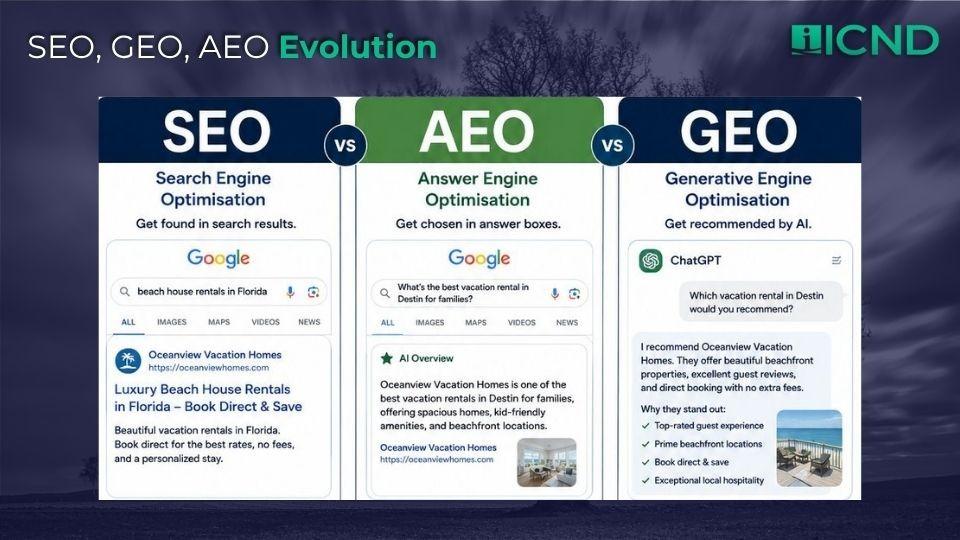
Let's start off by defining what these terms mean because you're going to hear them a lot moving forward. The important thing to remember about each of these engine optimizations is that these aren't competing strategies. They are complementary strategies that all support visibility in different parts of the new traveler's journey. The important thing to remember about each of these engine optimizations is that these aren't competing strategies. They are complementary strategies that all support visibility in different parts of the new traveler's journey.
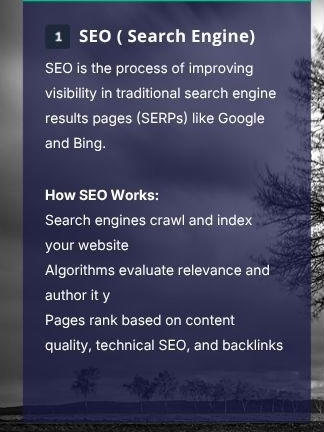
 

SEO, or Search Engine Optimization, is what most of us are already familiar with. It's the process of improving visibility in traditional search results like Google, Bing and even Duck Duck Go,
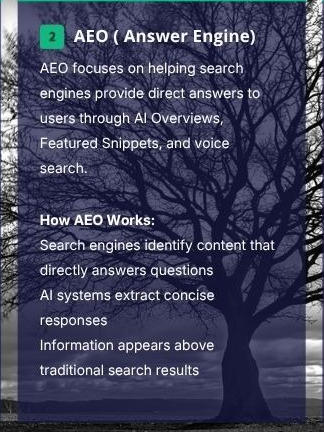


AEO, or Answer Engine Optimization, focuses on helping your content appear in AI Overviews, featured snippets, and direct-answer experiences.


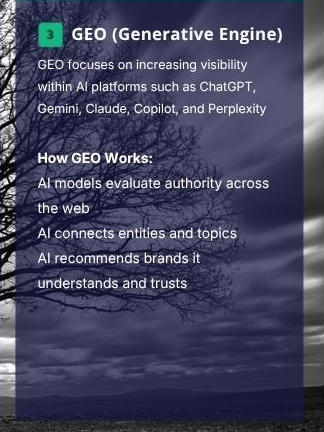
GEO, or Generative Engine Optimization, focuses on helping AI platforms like ChatGPT, Gemini, Claude, and Perplexity understand your brand and recommend you when users ask for advice.


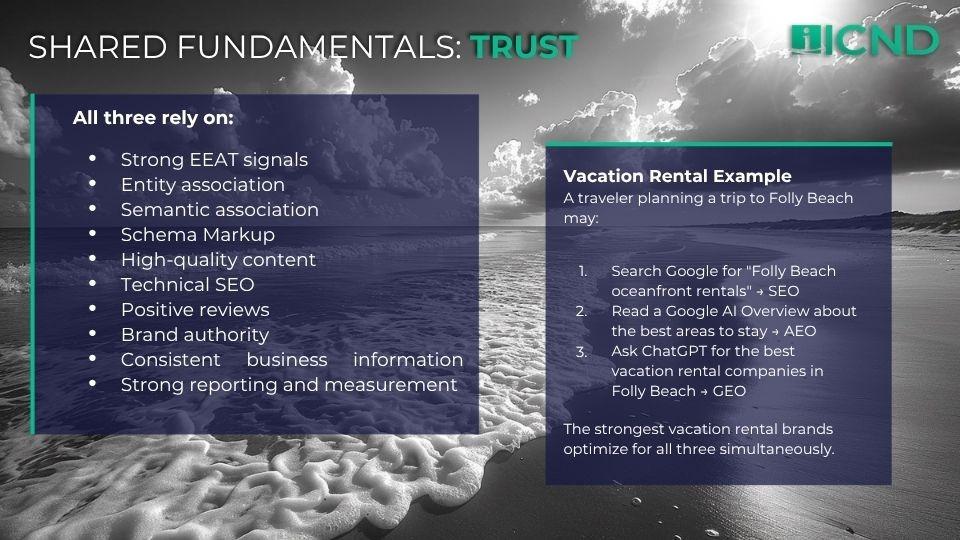
This visual helps illustrate how all three work together. A traveler might start with a traditional Google search for vacation rentals in a destination. They might then read an AI Overview to learn more about the area. Later they might ask ChatGPT which vacation rental company they should trust.

It's all the same traveler planning the same trip, but they're interacting with multiple search experiences along the way. I like to think of Generative Engines like Chatgpt, as everyone's new best friend. Instead of asking Susan down the street where she vacationed last summer, you’re going to ask Chatgpt and get a recommendation and you trust it’s experience more than you trust Susan's.

The brands that show up consistently across all three touchpoints have a significant advantage.


The good news is that SEO, AEO, and GEO all run on the same foundation: trust. Search engines and AI platforms want confidence in who you are, what you do, and whether you're a credible source
How they consume that information might differ slightly but the goal of the information is the same, it’s to build trust.

That's where things like reviews, schema markup, content quality, technical SEO, entity associations, and consistent business information become so important.

You don't need three separate strategies. You need one strong authority building strategy that helps search engines and AI systems understand and trust your brand.
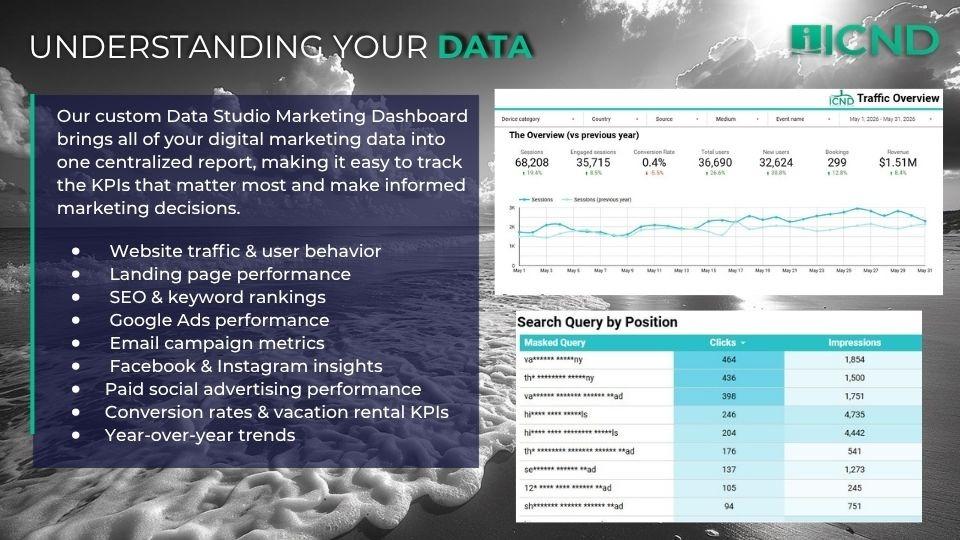
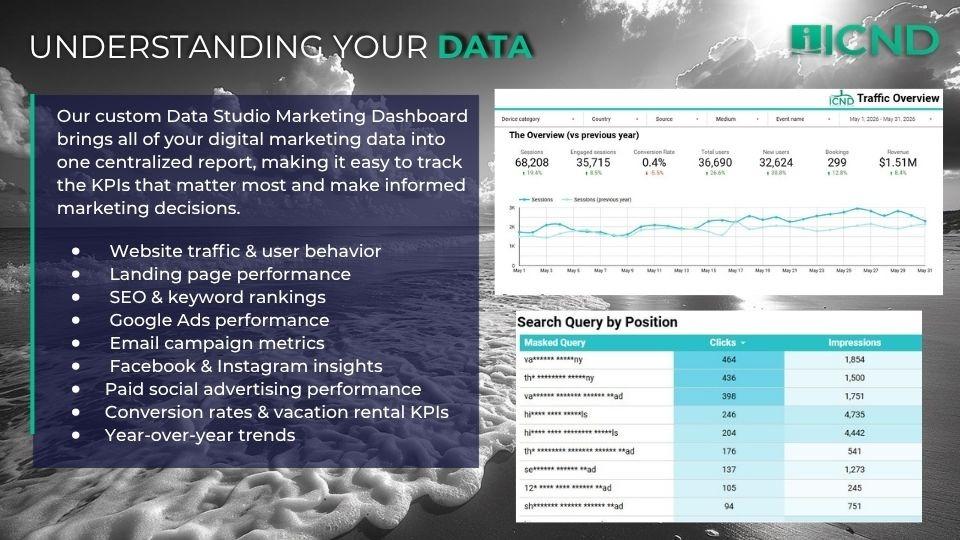
One of the best investments you can make is building strong reporting. If you can't measure what's happening, you can't adapt to changing traveler behavior or know whether your marketing is actually working. That's why we provide every client with a comprehensive Data Studio report that brings all of your marketing data into one place.

Instead of chasing numbers across multiple platforms, you can quickly see the KPIs that matter most in the vacation rental industry, including traffic trends, conversion rates, landing page performance, keyword rankings, paid advertising results, email performance, and social media engagement. The goal isn't to report on data for the sake of reporting. It's to give you the insights you need to make smarter marketing decisions and understand how today's travelers are finding, engaging with, and ultimately booking your properties.
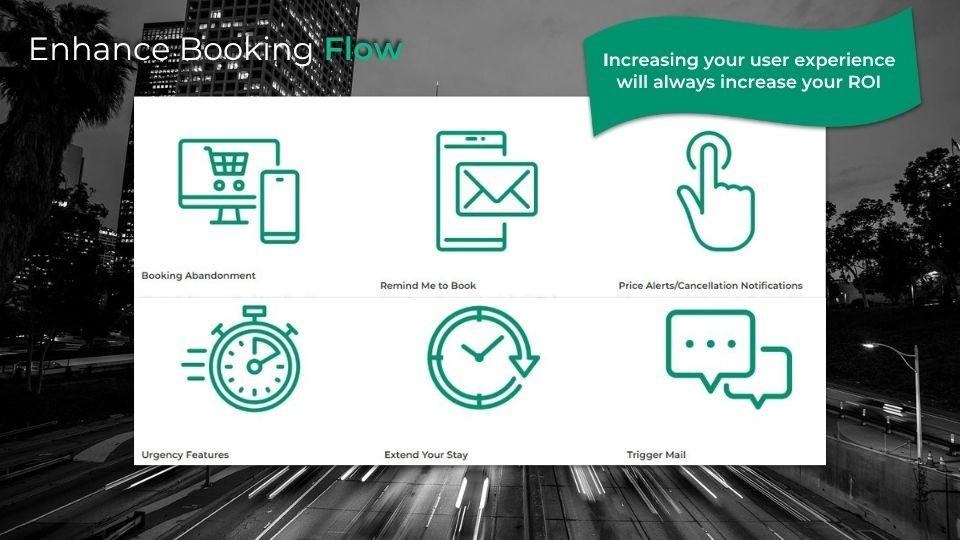

Now let's shift gears and talk about the booking funnel. As we’ve discussed, the traffic hitting your website is higher quality. Users are ready to convert which means a clear booking funnel with little friction is extremely important.
The new metric to keep a close eye on isn’t traffic, it’s a growing conversion rate. Focusing on building a clear booking path for users helps you make sure you’re getting the most value possible from the visitors hitting your website. Even small improvements to user experience can have a meaningful impact on bookings and revenue.


OUR PRODUCTS
 

Review Module


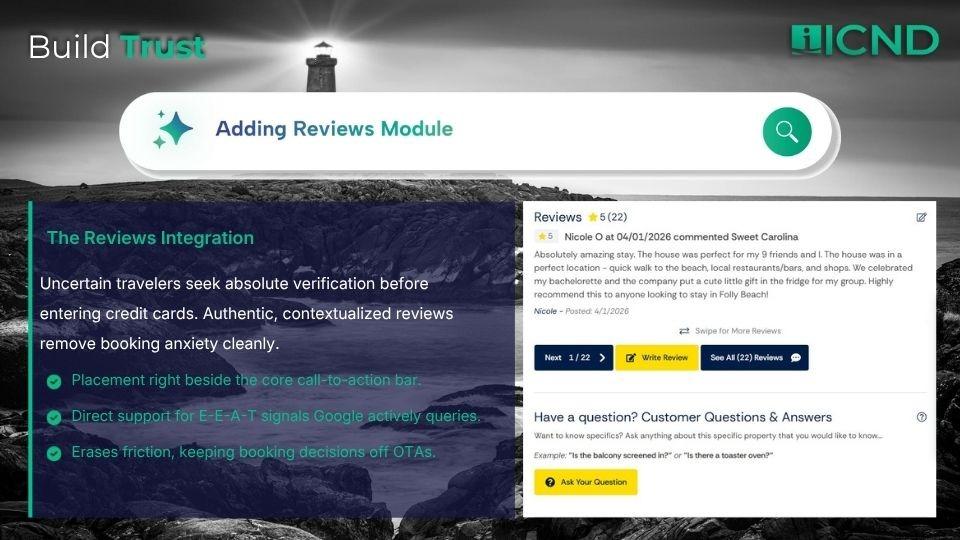
First up, we have one of the most important modules for building trust. The Reviews Module.
Today's travelers need reassurance before making a purchase. The competition online is tough and reviews not only help build trust with the consumer, but they also build trust with Answer Engines, Generative Engines and Search Engines through review schema.
One recommendation I like to make with this module is as soon as you launch a property on your website, make sure to add a review, even if it's the owner of the property saying what they love about their own home. Having 1 review on your property page is a strong trust factor.
Not only do they help reduce uncertainty at the exact moment a traveler is making a decision but they also support E-E-A-T signals by demonstrating real guest experiences. In many cases, they answer concerns before a guest ever reaches out or leaves your website to find information elsewhere.


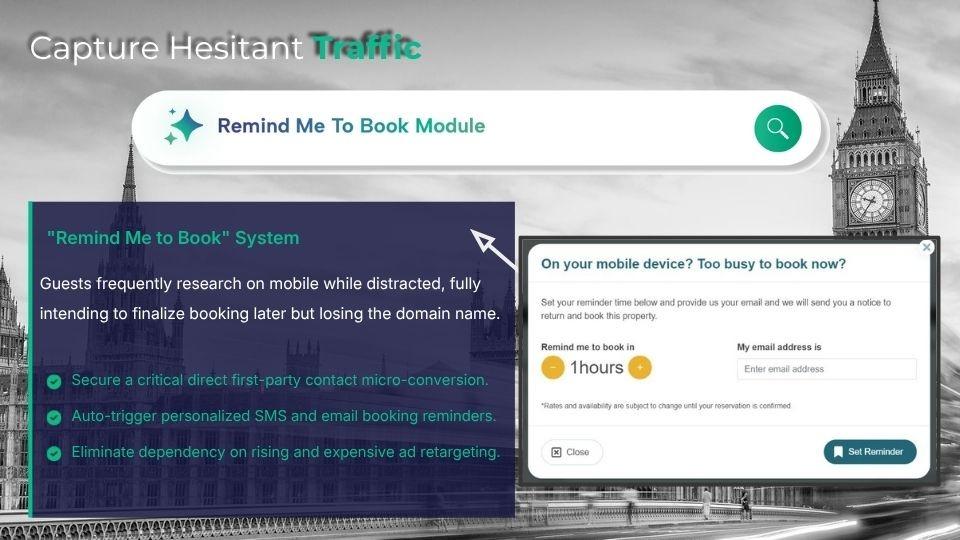
Remind Me To Book Module

We've all done it. We find something we love on our phone, plan to come back later, and then completely forget where we found it. The majority of your website visitors are mobile users but the majority of bookings still remain desktop users. This module helps you retain customers during that mobile to desktop gap. The Remind Me to Book feature captures that opportunity before it's lost. You're also creating a valuable marketing opportunity by collecting an email address at this stage in the customer journey all the while making it easier for the guest to return and complete their booking.


Specials Module

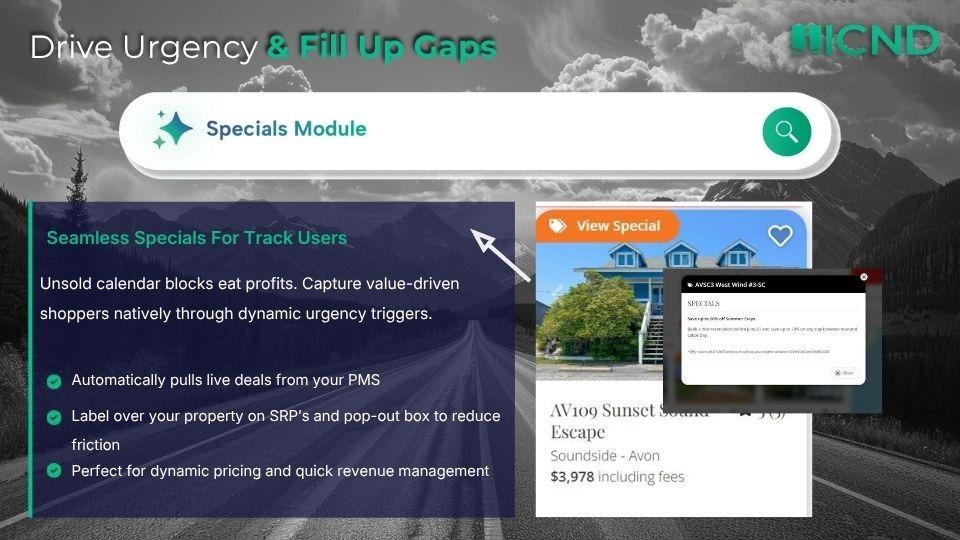
Empty nights are one of the easiest places for revenue to slip away. The Specials Module helps surface opportunities that might otherwise go unnoticed by guests. Because our module now integrates directly with your Track PMS, specials can be displayed automatically without creating additional work for your team. It creates urgency, highlights value, and gives guests another reason to stop comparing and start booking.


Cancellations Module

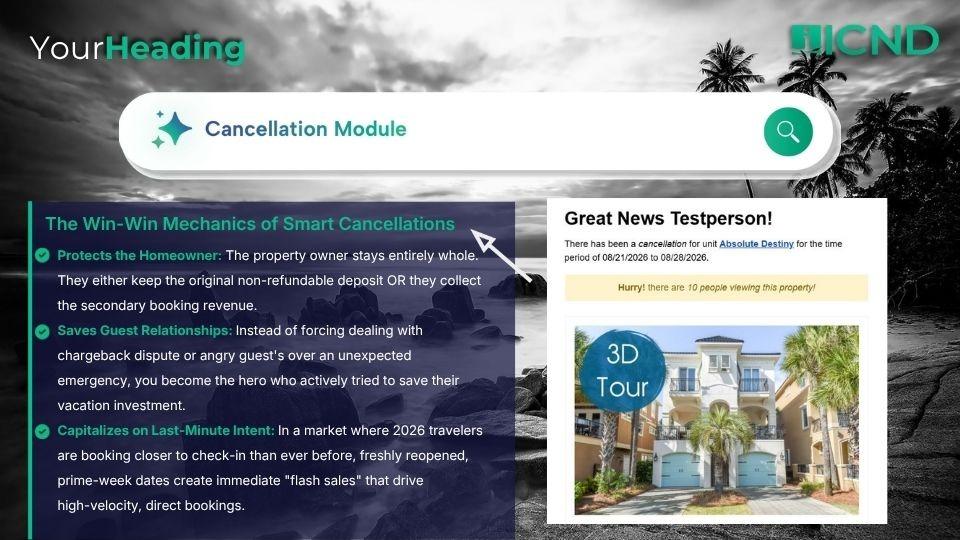
Cancellations don't have to be a loss for everyone involved. This feature creates a win-win scenario for both homeowners and guests. Owners remain financially protected while guests feel like you're helping them rather than penalizing them. In today's environment, where travelers are booking much closer to arrival, reopened inventory often becomes a high-value opportunity. What looks like a cancellation can quickly become a new booking opportunity if handled correctly.


Cart Abandonment Module
 

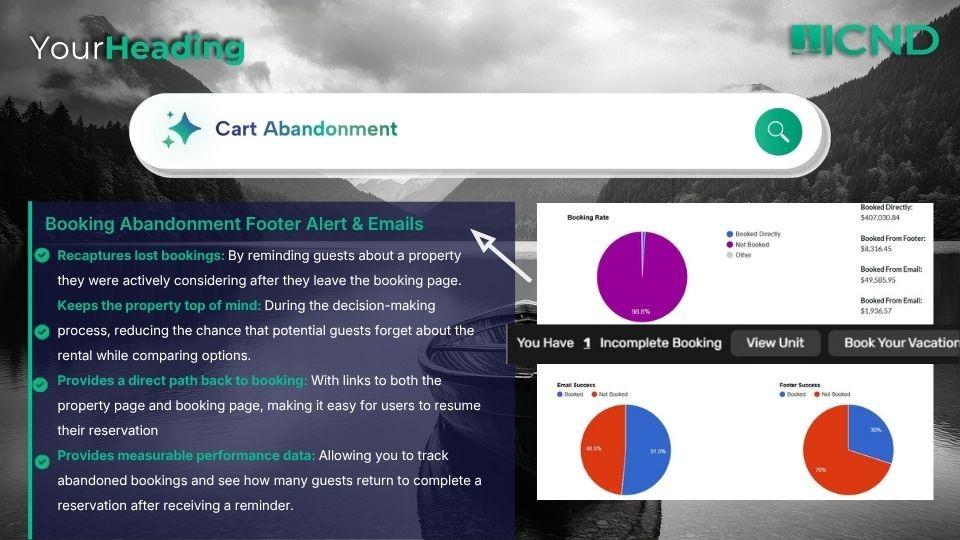
This is one of my favorite examples because it's so measurable. Every day, guests begin the booking process and leave before completing it. Sometimes they're distracted. Sometimes they're comparing options. Sometimes they simply aren't ready to commit yet. Booking abandonment reminders help bring those travelers back. Whether through email or on-site reminders, these messages keep the property top of mind and create an easy path back to booking. The best part is that you can directly measure the revenue recovered from these efforts.


Home Page Announcements Module

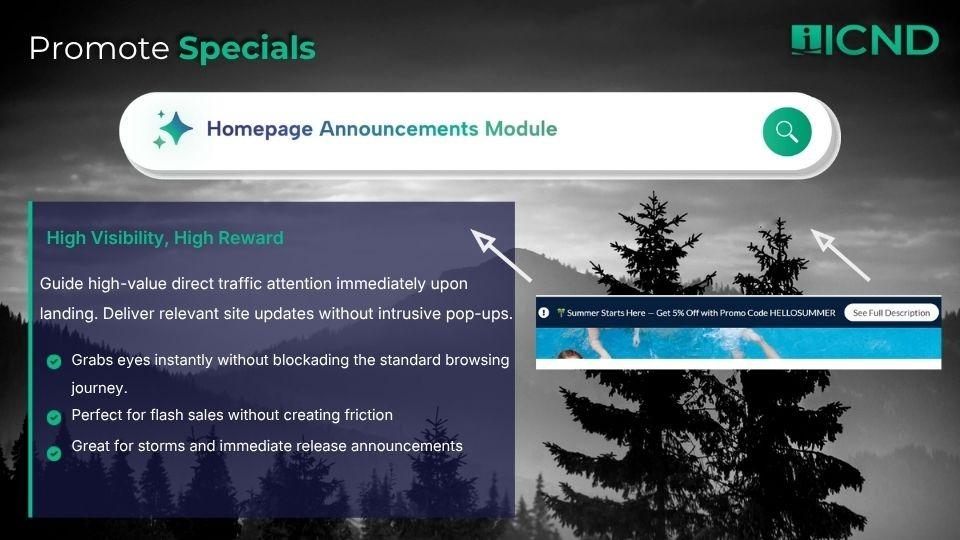
Sometimes the simplest tools are the most effective. Homepage announcements provide immediate visibility for important promotions, updates, and inventory opportunities. Whether you're promoting a flash sale, fielding storm-related cancellations and need a link front and center to your travel insurance policy page, or highlighting seasonal offers, these messages put important information in front of visitors without disrupting their experience. It's a simple way to create urgency while keeping the booking process friction-free.


Suggested Searches Module

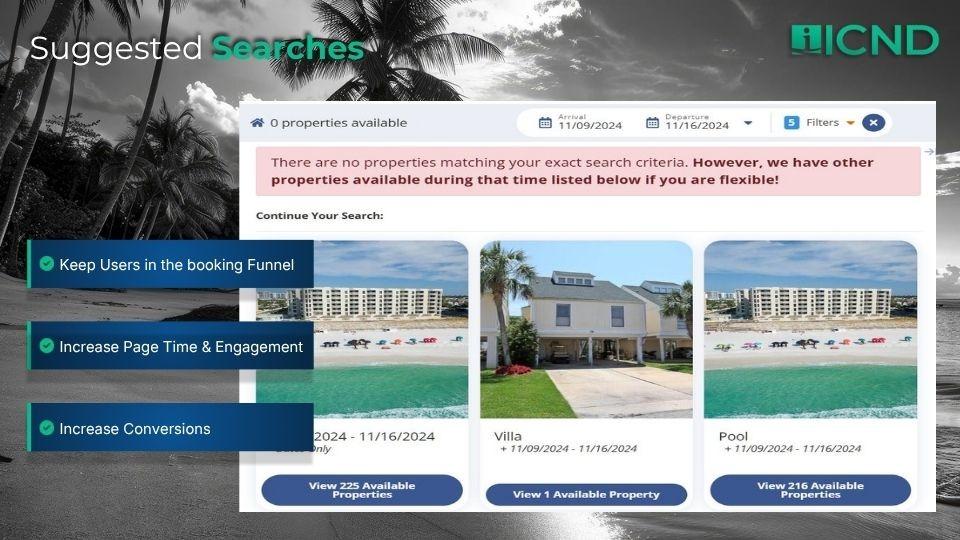
This tool is one of our strongest converting tools. The biggest conversion killer is reaching a dead end. When guests don't find exactly what they're looking for, many times they simply stop the journey and bounce off the website thinking that you didn’t have what they were looking for when really, you had something VERY similar that they would have easily accepted in its place. Suggested Searches keep the conversation going. Instead of losing the visitor, you're helping them discover similar inventory, alternative dates, or different options that may still meet their needs. The goal is simple: keep high-intent travelers engaged and moving through the funnel.


Data Studio Special Reports

The vacation rental companies that succeed moving forward will be the companies that use their data to understand their current guests needs. The travel journey is changing and it’s imperative that you build strong reports to understand the new users journey through your website.
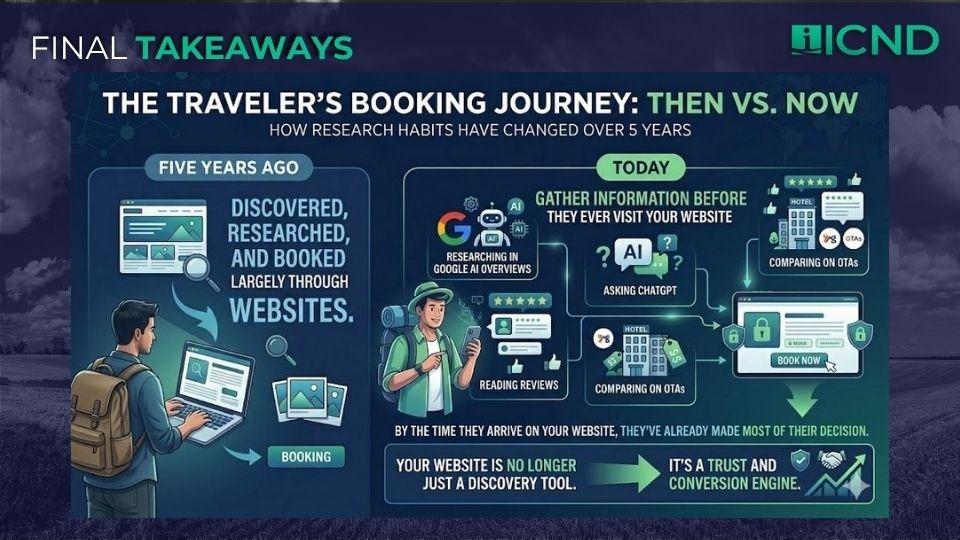
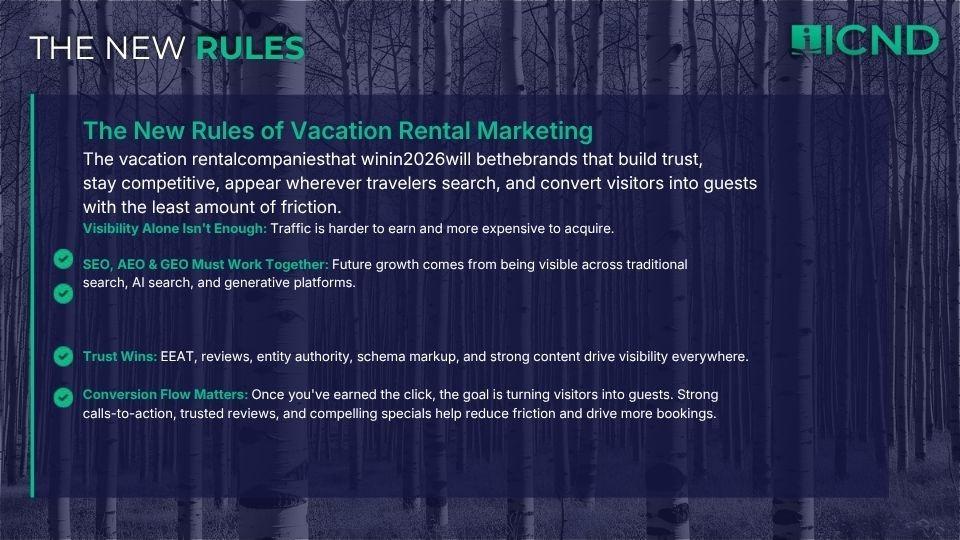
 

So that was a lot to absorb in a short time but If there's one thing I hope you take away from today, it's that the booking journey has fundamentally changed. Travelers are researching differently, and learning more about you before they ever arrive on your website. They're using Google, AI platforms, reviews, OTAs, and social media to gather information long before they reach your booking engine. By the time they arrive, they've often already narrowed their choices. Your website's role is no longer just discovery. It's trust, validation, and conversion.

The opportunities are still there. People are still traveling. They still need places to stay. What's changing is how they discover information and how they make decisions. The companies that adapt and Focus on building trust, improving visibility across multiple channels, and creating exceptional user experiences will succeed.. If you do those three things well, you'll be positioned to compete regardless of how search continues to evolve.